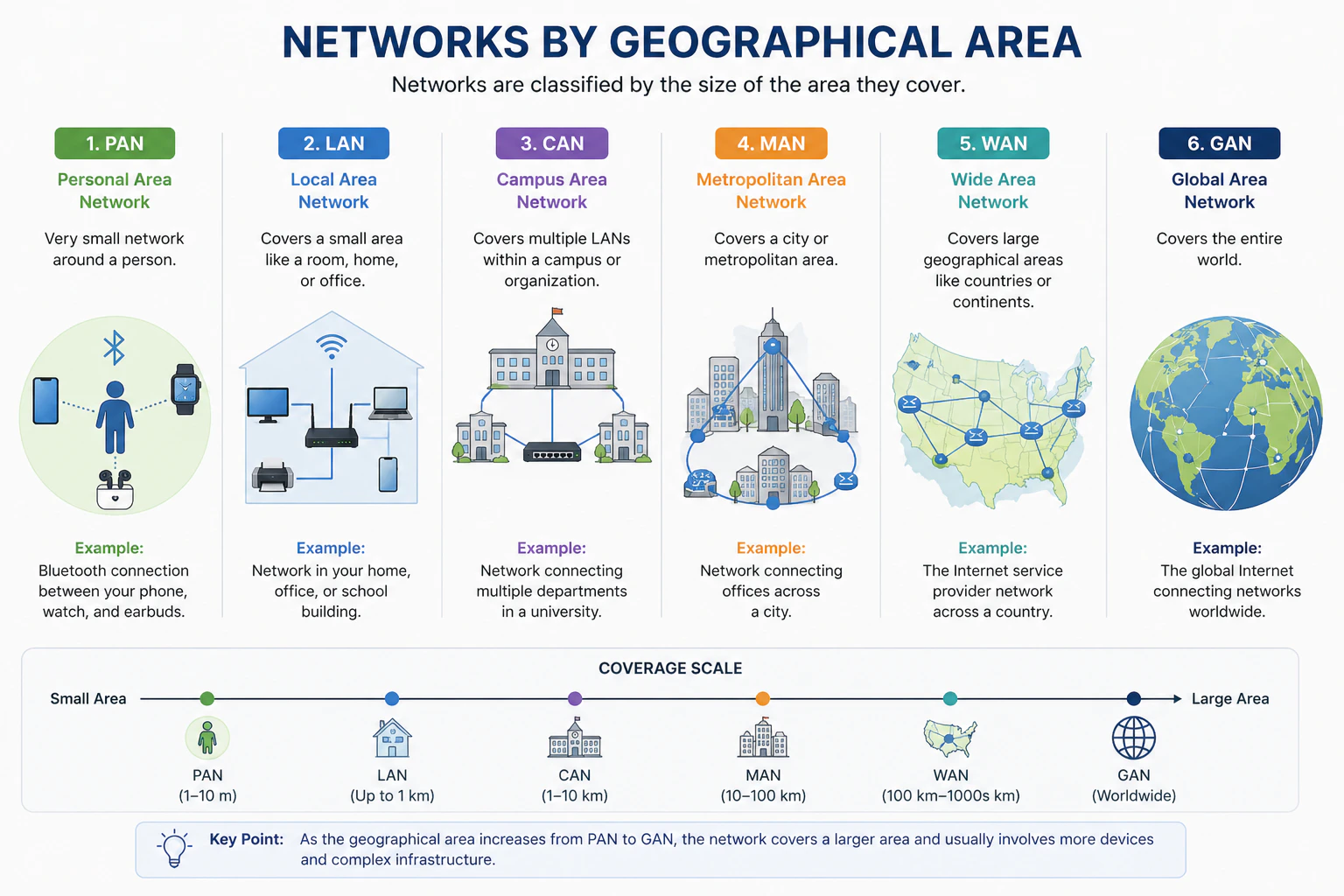
Networks can be classified based on the physical area (Geographical) or distance that the network covers. The range is starting from small personal networks to large global networks.
A CAN is a network that connects multiple LANs within a limited/specific geographical area. It’s bigger than a LAN but smaller than a city-wide network.
Range: University campus, corporate headquarters
Technologies: Fiber optics, Switches
Example: A university campus network connecting different departments, libraries, lecture halls, etc
A WAN is a network that covers a large geographical area, such as multiple cities, countries, or even continents. WANs are used to connect smaller networks (like LANs and MANs) over long distances, but they do not necessarily span the entire globe.
Range: Country, continent, or intercontinental
Technologies: Leased lines, Satellites, Internet
Example: A multinational company’s private network connecting offices in different countries; the Internet as a collection of interconnected WANs
A GAN is a network that covers the entire globe. It is essentially a network of WANs, providing worldwide connectivity. The Internet is the best-known example of a GAN, as it connects billions of devices globally using a combination of satellite, undersea cables, and other technologies.